Year 3 -30th September 2026 – Faial -Azores – the most Western Point of Europe
We all had a lie in with the first getting up at about 8.15pm and the last about 10.00am. We had just granola for breakfast as we have not bought any other food yet.
I caught up with the blog and others rested and read or got washing ready. Mark, Dave and I took the washing to the marina facility and dropped it off and got it started. Mark and Dave went for a coffee, Paul went for a wonder into town and John and I went to the restaurant we had dinner at clast night -the Club Naval de Horta where we had a bacon and egg galette and I sorted out and finalised yesterdays blog.
It was a day to sort things and look around. I went back to the Maritime Police to pay the Lighthouse & Harbour dues of 70 Euros. I had a wonder and got some bananas and bread.
Mark, Dave and John went on a whale watching tour and left about 2.30pm and I waved them off from Stormbird as they left the harbour.
Up to 28 species of whales and dolphins fill the busy waters of the Azores. The prime time for whale watching in the Azores, showcasing ocean giants, is from March to June. During this period, the largest whales migrate past the Azores from wintering near the equator to summer feeding grounds off Greenland, Iceland, and Norway. Baleen whales breed in tropical waters during winter, preparing their young for a North Atlantic journey. When passing the Azores, they linger for days to feed before continuing their journey. Spring brings plankton and krill, creating a whale paradise for marine giants and travellers. For marine biologists, it's an exciting time observing blue whales, the largest creatures. Baleen whales passing through, including blue, sei, and fin whales, show fewer acrobatics compared to humpbacks and occasionally jumping sperm whales. Despite global warming, these whales are seen beyond spring; Sei whales may appear after summer. The Azores remain a prime location for spotting these creatures, including minke and humpback whales, especially in spring. A number of these amazing creatures can be spotted throughout the year, such as the sperm whale, bottlenose dolphin, common dolphin, and Risso’s dolphin. Meanwhile, other species only grace the Azorean waters seasonally, such as the Atlantic spotted dolphins.
The guys came back from their whale trip and unfortunately saw no whales at all but did see a number of dolphins. This was a bit disappointing.
Paul and John had chatted to a fishing boat yesterday and the fisherman kindly have us a huge chunk of Marlin-it must have been about 5kg. We therefore decided to stay on board tonight have some of the fish. Paul got some vegetables from the supermarket to go with it.
Mark had created a ginger and soy sauce marinade. Paul cooked and the fish was absolutely delicious. It had been a good quiet day.
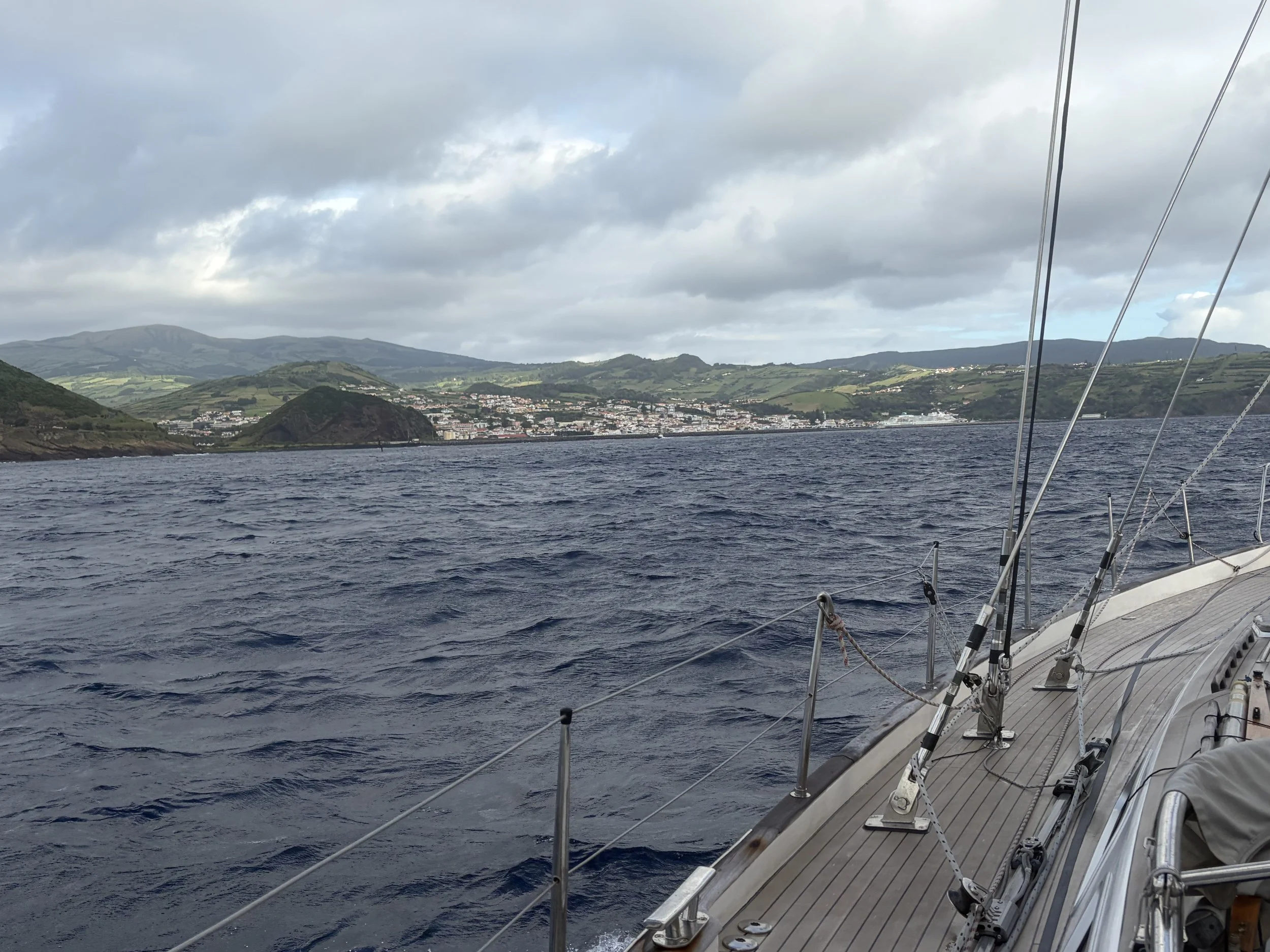
The picture of the day is the picture of Horta as we were arriving.
Need/Opportunity Year Three
I am now at the Azores and hope to head back to the UK on about 9 October 2026. At present I am full for the final passage back to the UK with some old veterans returning David Mark, Keith Watson (Watty) and of course Keith Winstanley -the Commodore.
The blog will continue as we continue the journey. If you have any comments or suggestions about the blog then do email me on hine.nick9@gmail.com