Year 3 -13 March 2026- – Marari Beach Resort-Kerala - India
We had a healthy breakfast and I met our driver Sabu at 10.30am. I wanted to go to the Coir Museum, the Alappy lighthouse and to see some of Alappy.
Coir, also called coconut fibre, is a natural fibre extracted from the outer husk of coconut, used in products such as floor mats, doormats, brushes, and mattresses, as well as horticulturally in potting mixes and soil amendments. In some countries it is locally called coprah (not to be confused with copra, a dry coconut meat). Coir is the fibrous material found between the hard, internal shell and the outer coat of a coconut. Brown coir, made from ripe coconut, is further used in upholstery padding, sacking, and horticulture, and white coir, from unripe coconut, for making finer brushes, string, rope, and fishing nets. Coir will float in water, so can be used in long lengths in deep water without adding weight that might drag down boats and buoys.
The name coir originally comes from Tamil, and later the Malayalam word for cord or rope (traditionally, a kind of rope is made from the coconut fibre). Ropes and cordage have been made from coconut fibre since ancient times. The Austronesian peoples, who first domesticated coconuts, used coconut fibre extensively for ropes and sennit in building houses and lashed-lug plank boats in their voyages in both the Pacific and the Indian Oceans. Polynesians themselves grew a special type of coconut called the niu kafa which yields a lot more fibre per fruit than types grown for human consumption (niu vai, for their water).
Later Indian and Arab navigators who sailed the seas to Malaya, China, and the Persian Gulf centuries ago also used coir for their ship ropes. Arab writers of the 11th century AD referred to the extensive use of coir for ship ropes and rigging
A coir industry in the UK was recorded before the second half of the 19th century. During 1840, Captain Widely, in co-operation with Captain Logan and Thomas Treloar founded the known carpet firms of Treloar and Sons in Ludgate Hill, England, for the manufacture of coir into various fabrics suitable for floor coverings. I did not realise where all these products came from although on my trip I have seen so many coconuts. The first Coir factory in Alappy was started by two Englishmen in about 1859 and over time it became the Coir Capital of the world. I went into the museum which sort of gave a history of Coir and originally it was women (before Industrialisation) who bashed the coconut to get the husk to make the Coir.
After the museum we drove into Alappy. Alappy had been established in about 1750. It was well designed with parallel canals with an easy system therefore of transportation to the port. It was a bustling town and I came across some of the canals but they seemed full of weed now so not really in use anymore.
I came across the Alappy Lighthouse. It was built in 1862 and is a major tourist attraction. It is now a museum but believe it or not there was no information about when it was built in the museum!! This was the first lighthouse of its kind in the Arabian sea coast of Kerala. The 27 m high lighthouse has a teak spiral staircase which I climbed. A piece of first-order optical equipment with coconut oil double wick lamp light-source supplied by M/s. Chance Bros., Birmingham,UK was installed and commissioned into service on 28 March 1862. The same equipment continued to serve till 1952 when it was replaced and has been replaced since for more modern systems. It is still in operation.
It was good to see and to climb but the museum was rubbish with little explanation really.
Once I had seen the lighthouse and from which I could see the beach and had a brief look around the town I decided to return to our hotel to pick up Jules who had stayed to sunbathe and rest.
We were then taken to a restaurant which had been recommended. Even though it said it was open online when we arrived it was closed for maintenance. We therefore returned to the hotel and had lunch.
We relaxed for the afternoon and read as Jules flies early in 2 days’ time. We had an early supper listening to Indian music with drums and a flute type instrument. They provide a great sound and it is pleasant background music.
In Indian music, the Bansuri (flute) and various traditional drums like the Tabla and Mridangam form a foundational rhythmic and melodic partnership. This combination is central to both Hindustani (North Indian) and Carnatic (South Indian) classical traditions, as well as many folk and devotional genres. The Bansuri is a transverse flute made from a single shaft of bamboo with six or seven finger holes. It is celebrated for its warm, airy timbre and its spiritual significance as the divine instrument of Lord Krishna. The primary percussion instrument in North Indian music, consisting of two drums: the smaller wooden dayan and the larger metal bayan. The drummer had 2 drums in our show.
We retired at a reasonable time and read. We move on tomorrow back to Kochi for Jules’s last day and night before she flies home.
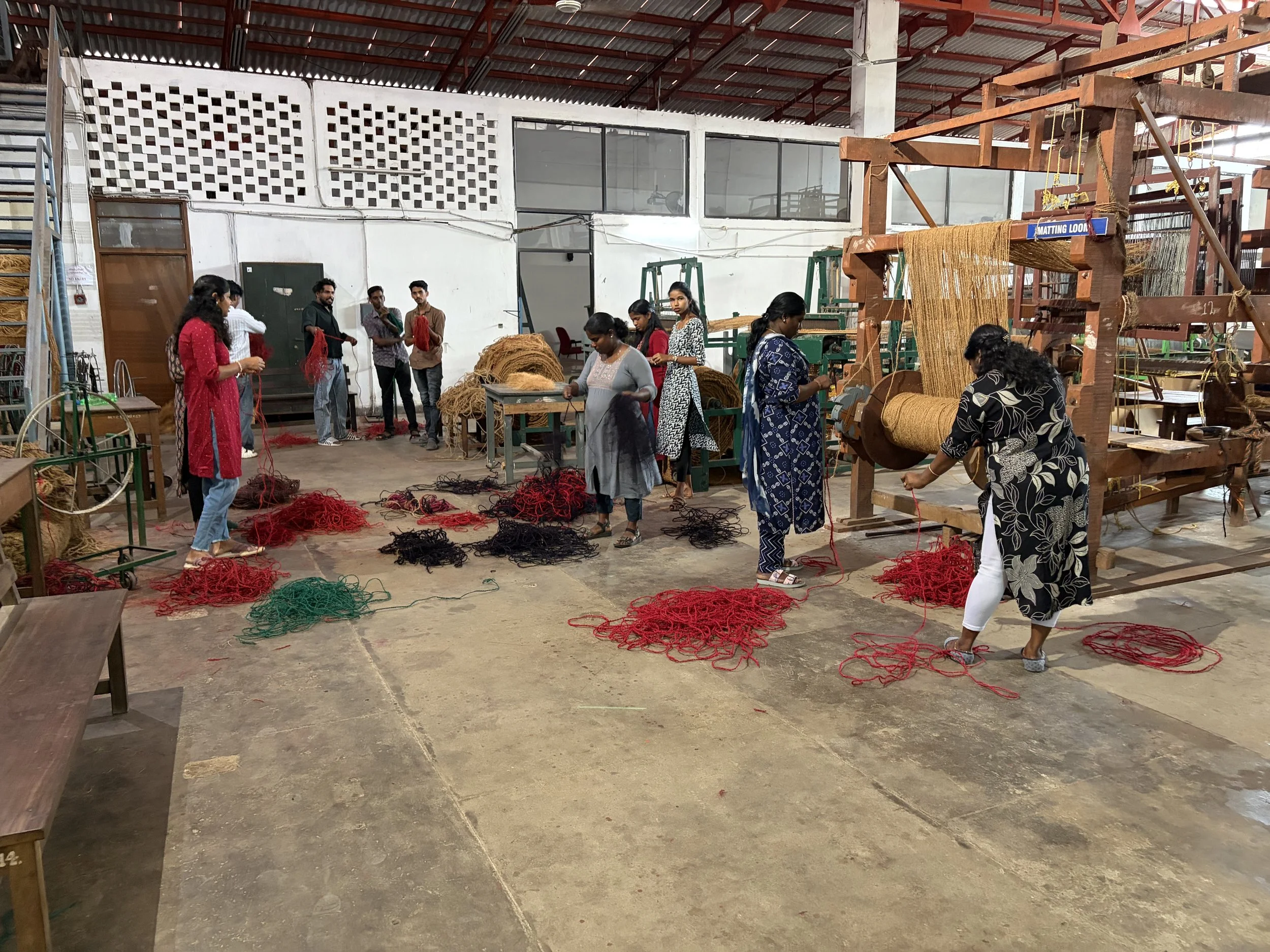
The picture of the day is at the Coir factory in which you can see the loom and some coir they have dyed and are sorting.
Need/Opportunity Year Three
In year three I will be going from Thailand to Sri Lanka, India, Maldives and then on to Mauritius, Reunion, Cape Town, St Helena, Azores and back to the UK.
I am looking for one crew from Mauritius/ Reunion Island to Cape Town (mid June to end of July). If of any interest do email me.
The blog will continue as we continue the journey. If you have any comments or suggestions about the blog then do email me on hine.nick9@gmail.com